Note: These are rules and regulations are for eventing competitions in Sweden. I am not very familiar with rules and regulations in other countries so I can't guarantee that these are valid in any other country.
Eventing consists of 3 parts, dressage, cross country and show jumping.
The dressage tests in eventing are different from the ususal dressage tests so you can't use a regular test for an eventing dressage set up.
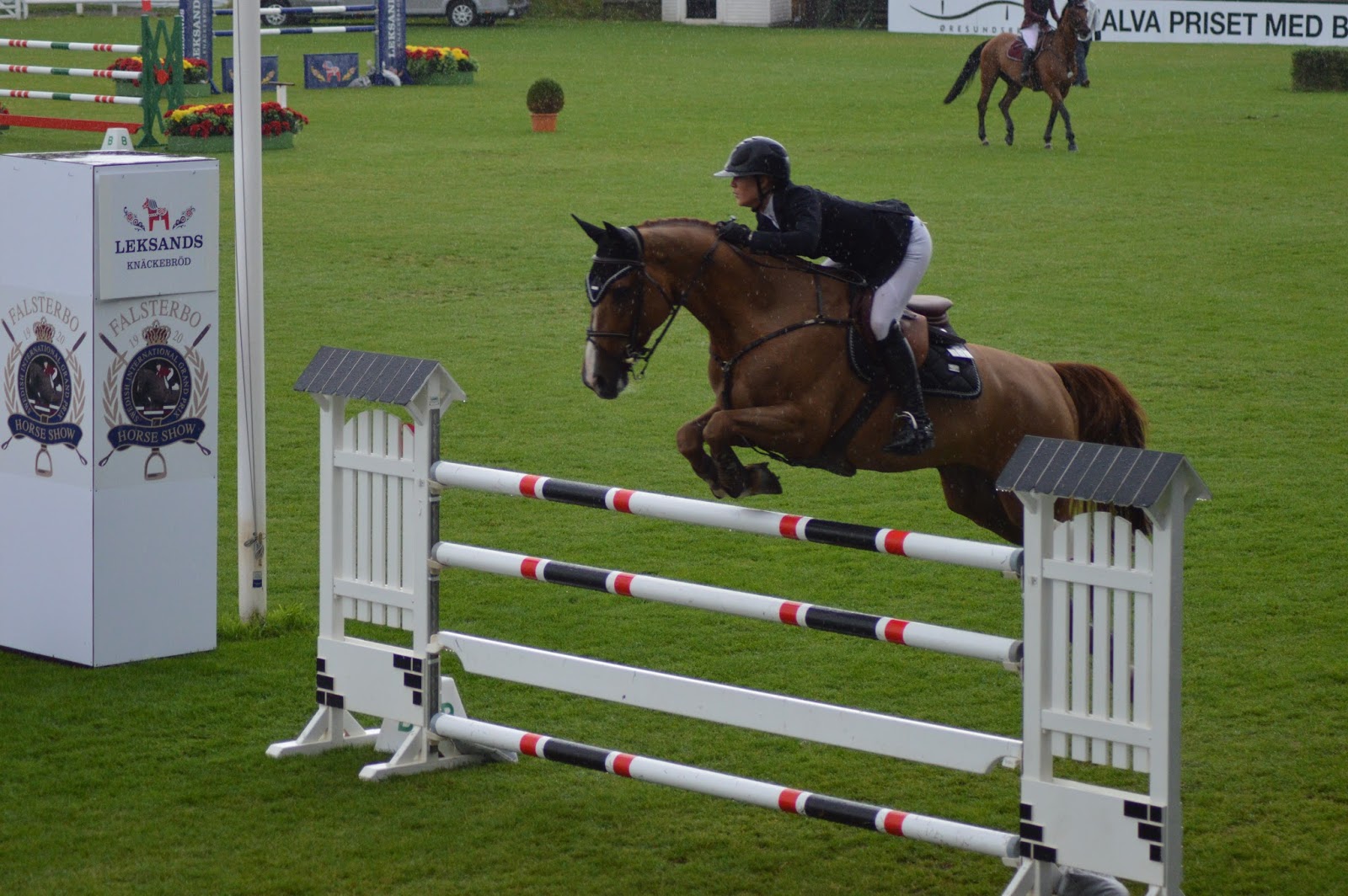
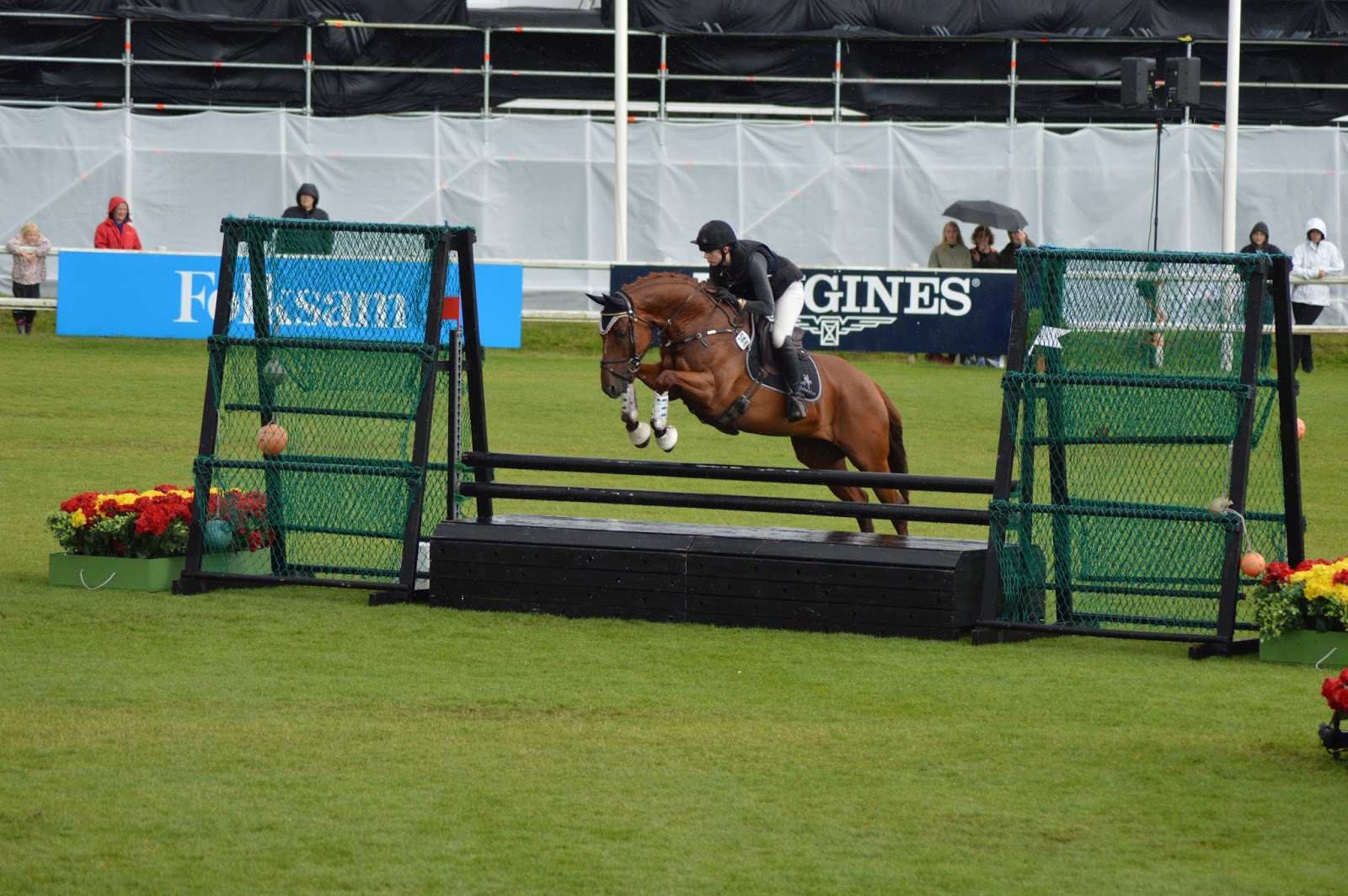
The cross country course can consist of about 30 obstacles of different difficulty levels and sometimes the course offers different ways to tackle the obstacle. The fastest way is often the hardest.
The show jumping is similar to "regular" show jumping in many aspects. It's designed to test the horse's ability in a different manner then the other parts of eventing.
Difficulty levels horses
H90
H100
CNC 1*/CCN 1*
CNC 2*/CCN 2*
CNC 3*/CCN 3*
Difficulty levels ponies
P60
P70
P80
P90
CNCP 1*/CCNP 1*
CNCP 2*/CCNP 2*
The P60-90 and H90-100 relates to the height of the obstacles and they are ridden in the same manner as the CNC and CNCP.
The CCN and CCNP levels are related to the international CCI levels. The competition are on during three days. Dressage on the first, cross country on the second and show jumping in the last.
The CNC and CNCP levels are related to the international CIC levels. The competitions are often one day competitions with all three test ridden on the same day. Some times it can be a 2 day competition and very seldom 3 day competition. The CNC and CNCP are ridden in another order than CCN and CCNP. Here the dressage starts it all but then the show jumping is second and the cross country is the last to be ridden.
Dressage
All (eventing) dressage classes for ponies can be judge by only one judge. For horses there must be three judges for CNC 3*/CNN 3* but for lower levels it is okay to only have one.
Riders equipment
Riders must wear a helmet with a working cheek band. Riders are supposed to wear a large number bib (in cross country) that can be seen both from the front and the back. If it is a one day competition the number bib should be worn during the dressage test and show jumping as well.
Dressage
Riding jacket and breeches should be worn in dressage. More information on dressage clothing can be found in my
dressage post. In horse classes spurs (max length 35mm) must be worn from CNC 1* and higher. For pony classes spurs (max length 15mm) must be worn from P90. In horse classes CNC 2* and higher, the riders may use a hat or bowler hat instead of a helmet in the dressage test.
Cross Country
A helmet must be worn and should preferably have a smooth surface. Safety vests are mandatory for every one. A shirt or sweater is often worn, long sleeves are recommended to protect the skin in case of a fall. Riding boots or jodphurs with half chaps are allowed. Riders must wear a Medical Card around their left arm. Long hair should be worn up and away from the face and neck as much as possible. Jewellery, facial piercings and earrings are not recommended during the cross country. Spurs are optional, max length for horses is 35mm and for ponies 15mm. If a whip is used it may not be longer than 75cm.
Show Jumping
Riding jacket and breeches. Turtleneck shirt or shirt with collar. At national or higher competitions a tie should be worn if a shirt with traditional collar is used. Riding boots or jodphurs with half chaps are allowed. Safety vests are allowed to wear under or over the riding jacket (all riders under the age of 19 MUST wear a safety vest). Spurs are optional, max length for horses is 35mm and for ponies 15mm. If a whip is used it may not be longer than 75cm.
Policemen and militaries are allowed to ride in their uniforms, with a helmet.
Horse tack
During all riding a saddle with stirrups and girth are to be used. A saddle pad or numnah should also be used. It is allowed to use a crupper on ponies. Bridles may only be made of leather but reins can be made of leather coated with rubber or textile like materials with leather pieces. Horses manes and tails may be braided. Fly bonnets may be used during cross country and show jumping and in some cases also in dressage tests (in the Olympics in London 2012 they were allowed to use it in the eventing dressage). Boots, leg wraps and leg protection are allowed in cross country and show jumping but
NOT in dressage.
Dressage
The saddle must be of English type. Half pads and sheepskin pads is allowed. In lower classes (up to P90 and H100), breastplates and stud guard girths can be seen in the dressage tests. Bridles should also be of English type. In CNC 2* and above it is allowed to use a double bridle
Cross Country and Show Jumping
The saddle is usually of English type as is the bridles. Running martingales are ok to use. Hackamore bridles and gag bridles are both allowed in show jumping. In cross country gags are allowed but hackamore is ONLY allowed on horses from CNC 2* and higher.
Obstacles
As in
Show Jumping obstacles are marked with red markings on the right and white markings on the left. They can be used not only on obstacles but to mark mandatory passages. Then they should sit on poles that are about 1.80m. On some obstacles (especially slim ones) it may be necessary to use bendable "marking pins" so that they won't hurt a horse that happens to touch them. On wide obstacles both the front and the back obstacles should be marked. The number of the obstacles is clearly marked.
Obstacles in cross country may be solid or possible to knock down. They should look natural and may not be formed so that they can be harmful.
Examples of suitable models
There are a lot of models suitable for eventing since it depends on what part of the eventing that you want to depict.
Here you can find the ones I gave as examples for show jumping. They could also be shown in cross country and
here is the ones I gave as example for dressage.
 |
| A Breyer Flash rr Sophie Nordstrom I believe. |
I think that Breyer's traditional
Flash would work well, especially for a scene galloping between obstacles or approaching the next obstacle.
 |
| My Ancient Gold, Breyer Tr. Akhal Teke OF |
Breyer Tr
Lonesome Glory mold could be standing in a starting box before getting the start signal for the cross country.